Midlife & Menopause
Protein after 40, in plain English
How much you actually need, where to find it, and why it quietly becomes one of the most important things on your plate from your forties onwards.
Protein has had a strange decade. It has been on the front of magazines, in supplement tubs, in iced coffees and in protein-fortified pasta. Most of that is marketing. Underneath it, though, is something genuinely worth paying attention to — particularly if you are a woman in your forties, fifties or beyond.
From around the age of forty, women begin to lose muscle and bone density at a rate that quietly accelerates through perimenopause. The biggest dietary lever you have to slow that loss is protein. Not exotic protein. Not powders. Just enough, spread across the day, alongside the right kind of movement.
How much protein do women actually need?
The standard adult guideline (used in the UK, EU and similar countries) is 0.75 g of protein per kilogram of body weight per day, with the US RDA only slightly higher at 0.8 g/kg. Both figures were set to prevent deficiency in healthy young adults. They are almost certainly too low for women in midlife who want to preserve muscle, bone and metabolic health.
The current evidence base — and the position taken by most sports nutrition and ageing researchers — points to somewhere between 1.2 and 1.6 g per kg of body weight per day for women over 40. For a 70 kg woman, that is roughly 85–110 g of protein a day. For a 60 kg woman, around 75–95 g.
“If you are over 40 and only just meeting the minimum, you are eating to avoid deficiency, not to age well.”
Why timing matters as well as total.
Younger bodies build muscle from a relatively small amount of protein at any meal. Older bodies need a bigger dose at each sitting to trigger the same response — a phenomenon researchers call anabolic resistance. In practical terms, that means three meals of around 25–35 g of protein each will usually do more for your muscle than the same total eaten as a tiny breakfast and a big dinner.
What 30 g of protein actually looks like.
- 150 g grilled chicken breast — about 35 g protein.
- A 150 g tin of tuna — about 30 g protein.
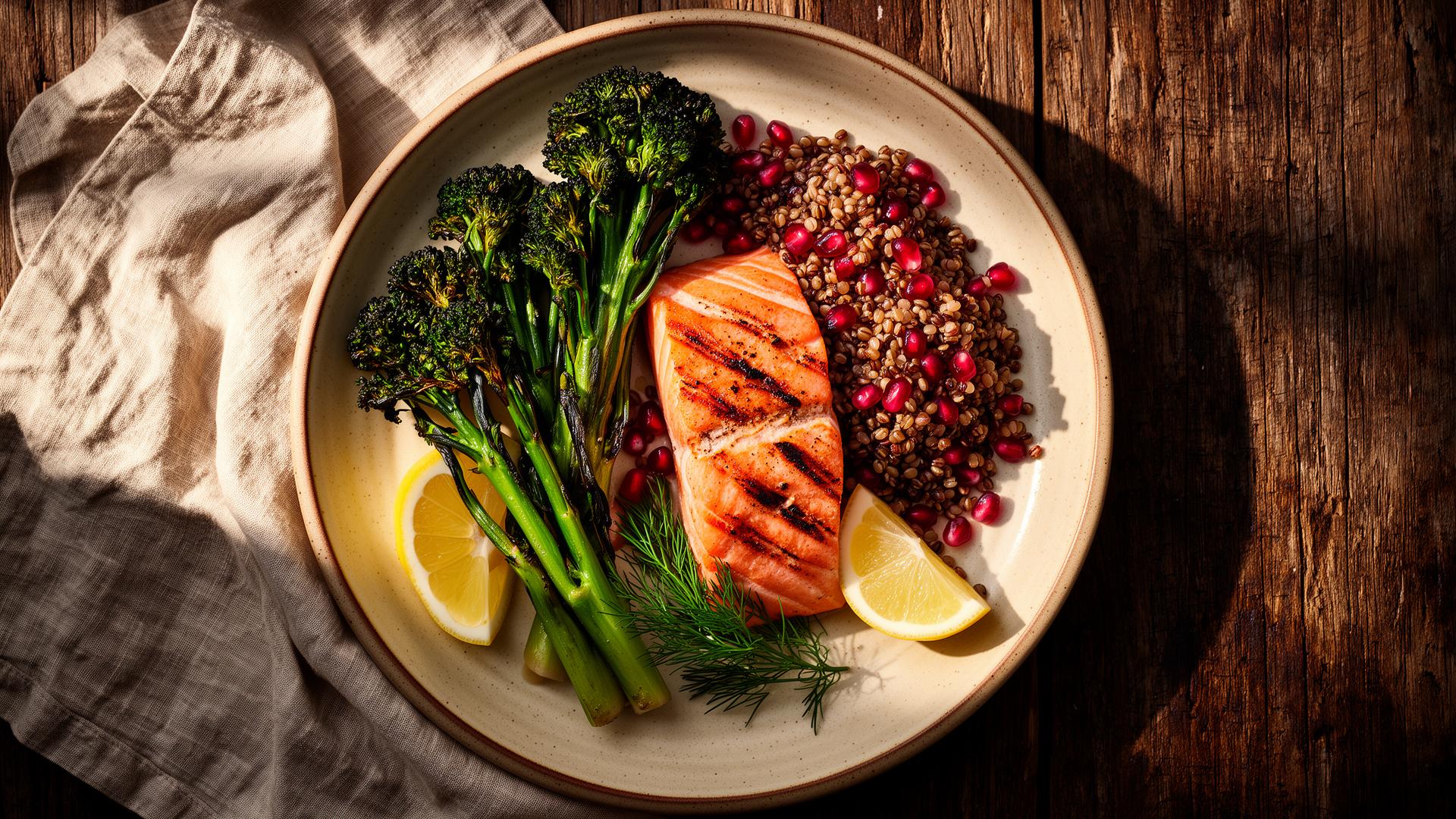
- 150 g salmon fillet — about 30 g protein.
- 200 g Greek yoghurt with two tablespoons of seeds — about 22 g protein.
- Three eggs plus a slice of wholegrain toast with cottage cheese — about 28 g protein.
- 150 g firm tofu with a serving of edamame and lentils — about 30 g protein.
- 100 g paneer in a vegetable curry with a side of dal — about 30 g protein.
The appetite bonus.
Protein is the most satiating of the three macronutrients. Women who shift their breakfast from a bowl of cereal to something protein-led almost always notice less mid-morning hunger and steadier afternoon energy. That is not magic; it is simply that protein takes longer to digest and produces a different hormonal response than carbohydrate alone.
Do you need protein powder?
No. Whole-food protein wins on every measure that matters except convenience. That said, a scoop of plain whey or a good plant blend in your morning yoghurt is a perfectly reasonable shortcut on busy days. Treat it as scaffolding, not the building.
A simple template for the day.
- Breakfast — Greek yoghurt with berries and seeds, or eggs with toast and tomatoes.
- Lunch — a generous palm of fish, chicken, tofu or eggs over a big salad with grains.
- Dinner — protein the size of your palm, half a plate of vegetables, a quarter plate of slow carbs.
- Snack (optional) — cottage cheese, edamame, a small handful of nuts, or a boiled egg.
None of this needs to be optimised. A reasonable amount of protein at three reasonable meals will, over years, do more for your strength, bone density and energy than any supplement you can buy.
Sources & further reading
- Bauer, J. et al. (2013). Evidence-based recommendations for optimal dietary protein intake in older people. JAMDA.
- Phillips, S. M. et al. (2016). Protein 'requirements' beyond the RDA. Applied Physiology, Nutrition, and Metabolism.
- British Nutrition Foundation · Protein